
Cybersecurity
Before You Pay: A Callback Rule for Vendor Bank Changes
A familiar invoice is not proof that new banking instructions are genuine. Give your team a repeatable way to pause, verify and approve the change.

Let Nexus read this article to you.
Uptime AI & Security’s executive assistant.
AI narration by Nexus · Tech Pulse intro/outro. Full transcript below.
Follow The Uptime Brief
Share this article
An invoice arrives from a supplier you recognize. The amount looks right. The message fits the conversation. There is just one change: payment should go to a different bank account.
That change deserves its own verification, even when everything around it looks familiar. Business email compromise can involve an imitation address or access to a legitimate mailbox. A convincing email thread is not independent proof that new payment instructions are genuine. FBI: Business Email Compromise
For a small business, the practical response is a repeatable payment process, not a demand that every employee become a fraud investigator.
Make a changed destination a stop point
Here is a proposed rule to adapt with your finance lead:
Do not change vendor banking details or release a payment to a newly supplied account until the change has been independently verified and separately approved.
Apply it to requests in email, attachments, chat and phone conversations. A familiar logo, urgent deadline or senior person's name should not bypass the process. The trigger is the changed destination, not whether someone thinks the message looks suspicious.
Put the rule where work happens: the vendor-change checklist, payment instructions and new-hire training. Name who can put a payment on hold and who resolves an unanswered verification request.
Call the contact you already know
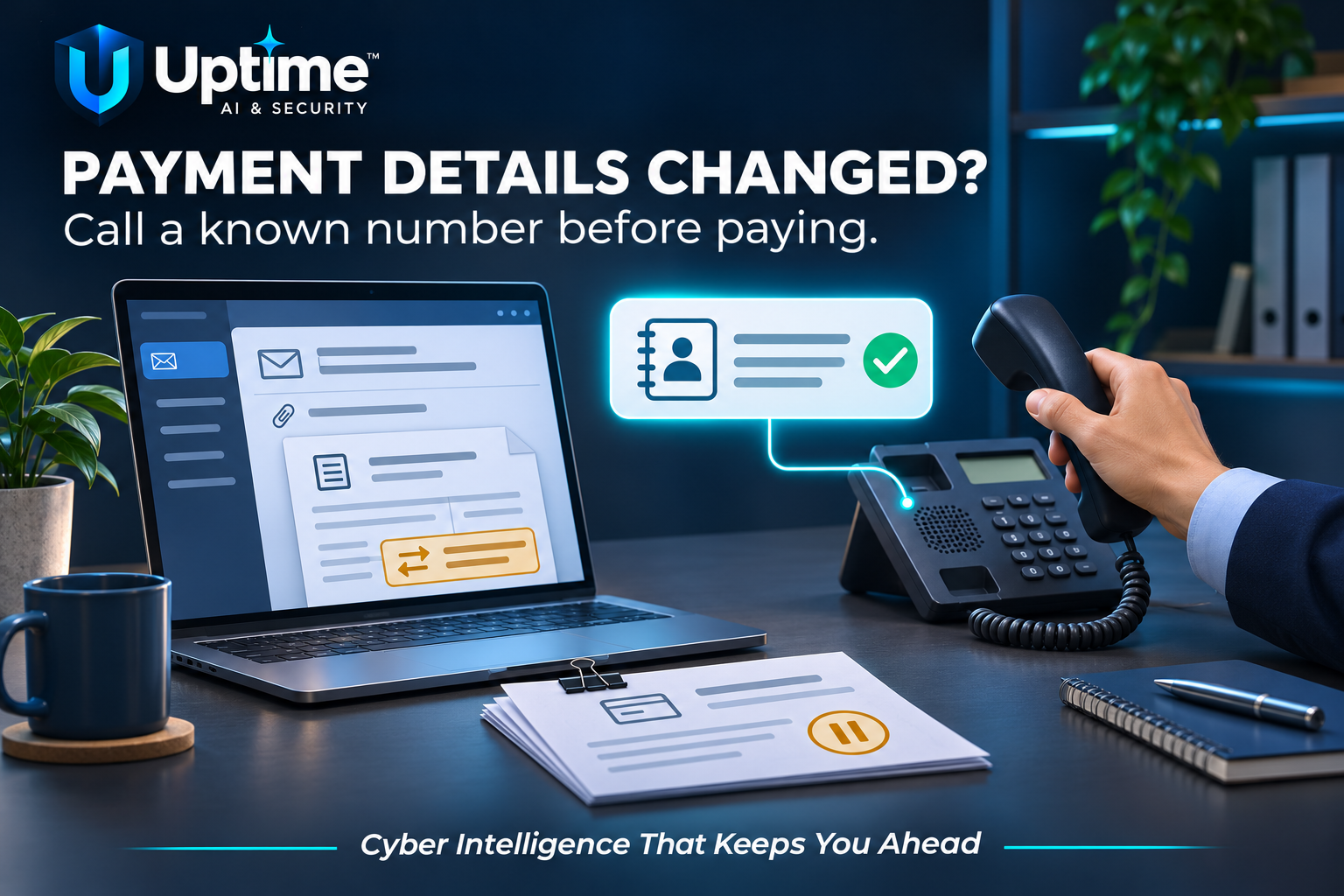
Use a phone number established independently of the change request, preferably from your existing, verified vendor records. Do not rely on a replacement number in the email signature or attached invoice. The FBI specifically recommends previously known numbers when confirming transfers. FBI: Payment-verification guidance
A simple opening is: “We received a request to change your payment instructions. Before we update anything, I need to confirm it through our established process.”
Reach the appropriate vendor contact and confirm both the request and the destination details using your agreed procedure. A reply in the same email thread is not a separate check. If you cannot establish the right contact, keep the change pending and escalate internally. Verification is a condition of payment, not a race against a two-minute timer.
Give the second reviewer something to check
For teams with more than one authorized person, separate verification from final approval. The FBI identifies secondary staff sign-off as a useful safeguard for vendor payment changes. FBI: Secondary sign-off
Our suggested review record is short: vendor name, request date, verifier, source of the callback number, verification outcome and approver. Keep sensitive banking details in the restricted system where they belong, rather than copying them into broad chat channels.
The second person should check the documented verification and the intended payment destination, not merely approve because an invoice is due. In a very small firm, identify an appropriate owner or authorized accounting contact in advance. Do not describe a one-person review as dual control.
Rehearse the awkward exception
Imagine the supplier cannot be reached, the payment cutoff is approaching and a colleague says, “We have paid them for years.”
That is exactly when a written process should help. Decide ahead of time who can resolve an exception, what evidence is required and when the payment stays on hold. Staff should not have to invent a policy while somebody is pressuring them.
Practice with a fictional invoice and no real transfer. Ask the team to find the verified contact, record the check and identify the approver. This tests whether the process is usable, not whether employees can spot a planted typo.
If money has already moved, act immediately
Contact the sending bank through a trusted channel, report suspected fraud and request a recall or reversal. Ask what documentation the bank needs and whether it can contact the receiving institution. File a detailed report with the FBI's Internet Crime Complaint Center at IC3.gov promptly. Do not wait for an internal investigation to finish before contacting the bank. IC3: Incident response
Have transaction references, dates, amounts and relevant communications ready for the bank and investigators. Notify your internal finance and security leads so they can coordinate next steps. Ask IT to investigate possible account compromise rather than assuming the problem ends with one invoice.
Fast reporting can help, but recovery is not guaranteed. Bank procedures differ, and IC3 describes assistance with freezing funds as a possibility, not a promise. IC3: Recovery guidance
Start with one process you can verify
Choose your next vendor-bank-change request as the point where this rule becomes routine. Make the callback independent, the approval deliberate and the response contacts easy to find.
Want help reviewing the security side of that workflow? Talk with Uptime AI & Security about a scoped review of safeguards, responsibilities and response readiness. Payment authorization remains with your business and bank.